
 Densery
Manufacturing
Where agents read drawings, certificates, customs packs and quality records — traceable by design.
The drawing is the specification. The record is the proof.
A drawing defines what gets built, a quality record proves it was built right, a supplier certificate proves the material was real. All three are read by people, at volume, under deadline.
Agents do the counting; your estimator judges
If your best estimator spends two days counting before they can judge, the counting is the constraint.
Agents leave the evidence as they go
Conformance evidence exists the moment the part is made — not when the audit is announced.
Agents learn from every correction
Every reviewer correction feeds the ontology. Accuracy improves on your drawings and your suppliers.
What agents complete here
Written into the ERP, the PLM or the quality system rather than a spreadsheet.
Drawing-to-quantity take-off
Agent converts structural drawings into quantities, weights and cut lists, reading geometry, section marks and notes as one document — routed to a named estimator when a dimension cannot be resolved.
Supplier documentation
Agent checks certificates and test reports against the PO and the spec — routed to a named quality engineer when an exception is found.
Quality and traceability records
Agent ties inspection to lot, heat and serial so an audit is answered from the record — routed to a named quality lead when a record is incomplete.
Import, customs and procurement
Agent matches invoice to purchase order and packing list to bill of lading, classifies the goods, checks licences for controlled materials, assembles the declaration pack and posts duties and landed cost to the ledger — routed to a named trade compliance officer when a classification or a licence is in doubt.
Why manufacturers choose Densery
We don't sell a vision model or an OCR engine. We complete the take-off, the check and the record — and your quality record answers somebody else's audit.
Geometry, not just text
The ontology carries the relationship between a dimension, a line, a section mark and a note in the corner.
Audited constantly
Customers, certification bodies and failure investigators ask what an examiner asks: show me it was checked.
Inside the plant, inside the policy
On-premise answers a Japanese or Korean parent's data policy without a negotiation.
Order to ledger, one chain
Import, customs, procurement and accounting documents reconciled against each other and posted — running today at a chemicals producer.
Bring your own AI
Estimators and quality engineers point their existing AI at Densery and get the drawing ontology and the described tools — no new client to roll out.
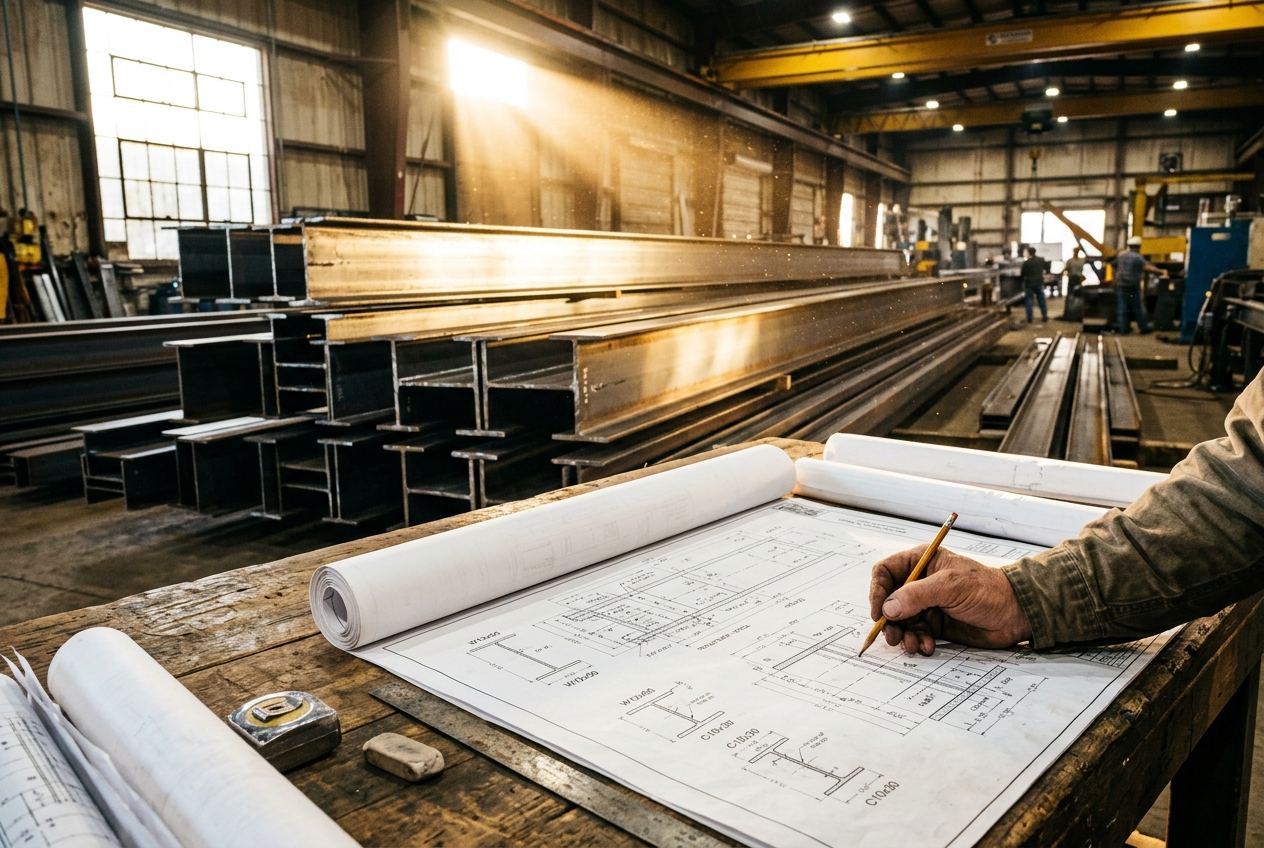
Steel fabrication · Japan
A Japanese steel fabricator — drawings read as geometry.
What it proves
The architecture holds when the content has nothing in common with a loan file — meaning carried in geometry and annotation rather than text.
Where else this applies
Any structural or rebar fabricator estimating at volume — in Japan, Southeast Asia or the US — where the take-off decides whether a bid is won and profitable.

Chemicals · Vietnam
A chemicals producer — imports, customs, procurement and accounting as one agent chain.
What it proves
Each shipment arrives as ten documents that have to agree with each other. Agents match them, classify the goods, check the licences controlled chemicals need, assemble the customs pack and, on clearance, post duty, VAT and landed cost to accounting.
Where else this applies
Any importer of regulated goods — chemicals, pharmaceuticals, food — in Vietnam, Indonesia, Thailand or beyond runs the same chain under the same tariff logic.
Who this is for.
If your data can go anywhere and your documents are already clean and digital, you do not need us.
| Organisation | Size | Why |
|---|---|---|
| Discrete and metals manufacturers | A drawing-intensive operation with a quality function | Drawings, certificates and quality records are read by people at volume, under deadline. |
| Importers of regulated materials | Continuous customs and licence volume | Chemicals, pharmaceuticals, food — one agent chain from order to ledger. |
| Regional operations of Japanese, Korean or US parents | Any scale | Parent data policy makes on-premise a requirement; a proven deployment inside the same group helps. |
| Not a fit Assembly operations, no drawing or quality estate | — | Not enough document work to justify the deployment. |
Bring twenty drawings or supplier packs. Leave with your take-off hours.
One process first, live in under three weeks, with the evidence from day one.